
What Is Audio System Engineering? A Beginner’s Guide to Modern Sound Design
What Is Audio System Engineering? A Beginner’s Guide to Modern Sound Design
There’s natural music and then there’s music that we humans create using different tools and techniques. The music created or produced by us, often needs engineering. This is why the need for audio system engineering is on the rise today. Be it live events or broadcast studios, or even corporate AV setups, audio system engineering plays an important role in ensuring best quality of sound.
Understanding the very fundamentals of modern sound design has today become of paramount importance for setting up a professional sound system. This guide does exactly the same, as it explains in detail about the core concepts of audio system engineering, and how it contributes to superior audio experiences.
What Is Audio System Engineering?
Audio System Engineering refers to the process of designing, integrating, and optimizing sound reinforcement systems, with the aim to achieve clear, immersive, and high-fidelity audio. The process involves the configuration as well as selection of audio equipment like speakers, microphones, mixing consoles, amplifiers, and digital processors to deliver a seamless audio experience.
A perfectly engineered sound system ensures high speech intelligibility, proper coverage and minimal distortion, making it perfect for stadiums, concert halls, auditoriums, and corporate boardrooms.
Key Components of an Audio System
A professional audio system is made up of several components, each of which plays an important role in sound reproduction:
1. Microphones
A microphone is one of the most important parts of the sound system. It converts sound waves into electrical signals. There are different types of microphones and can be chosen depending on the application. Types of microphones include: condenser, dynamic, ribbon, or lavalier microphones.
2. Earphones
Earphones are a personal audio device which are used by users for multiple purposes like gaming, listening to music or even attending official corporate events. Earphones can be both wired and wireless.
3. Headphones
A headphone is an audio device designed to be worn around the ears. It is one of the most widely used audio equipment known for delivering the highest quality of sound. It is available in wired and wireless forms.
4. Speakers
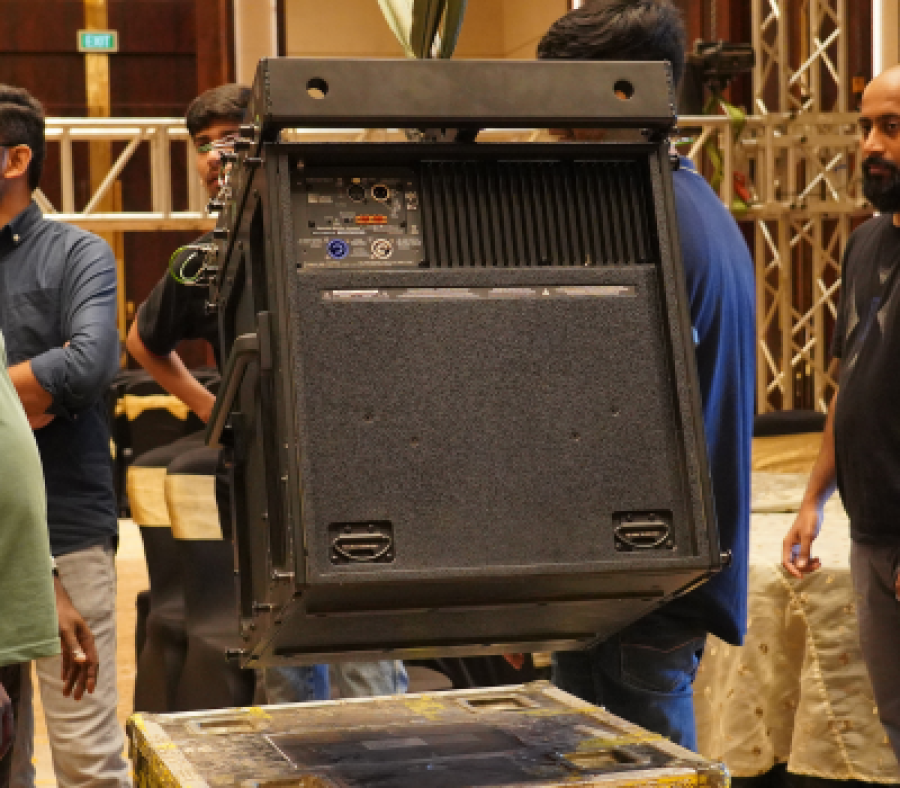
Speakers are devices that are used majorly for amplifying audio for personal and professional use. They are of different types including, PA systems, home speakers, line array setups and more. Speakers are often used for live performances, home entertainment, corporate AV systems and more.
The Role of an Audio System Engineer
An audio system engineer can help you in multiple ways. Some of which include:
Sound System Design – The process of planning acoustic setups for optimal coverage.
System Integration – This is done by ensuring that different components of audio solutions work harmoniously.
Acoustic Calibration – This helps in balancing EQ settings, delays, and in gaining structures.
Live Sound Management – This process is carried out to handle troubleshooting, real-time mixing, and signal routing.
Technical Support – This is an essential step in maintaining and upgrading sound systems for improved performance.
Irrespective of the type of event, audio engineering helps in shaping the auditory experience on an overarching level.
Choosing the Right Audio System for Your Needs
There are multiple things that one should consider while selecting the right audio system. Here’s a step-wise guide:
Application – Is it for live events, broadcasting, or commercial spaces?
Venue Size & Acoustics – Sound behaves differently in open arenas vs. closed spaces.
Scalability – Future-proof your audio setup with modular, upgradable components.
Budget & Maintenance – Invest in high-performance audio solutions that fit within your budget.
For best results, work with professional audio integrators to design customized solutions tailored to your specific needs.
To sum it up, we can say that understanding audio system engineering is essential for creating crystal-clear, immersive, and professional sound experiences. Whether you're a sound enthusiast, live sound engineer, or system integrator, mastering modern sound design ensures flawless audio performance across various applications.
Need expert guidance? Sun Infonet provides industry-leading professional audio solutions tailored for concerts, corporate AV, broadcast environments and more. Explore the best audio technology today!
Latest Post
- The Science of Sound, Simplified: Sun Infonet Brings Global Training to India with Mauricio Magu Ramirez
- Revolutionizing Live Sound: Audiators Becomes North India’s First to Deploy Shure ADPSM, Courtesy of Sun Infonet
- Audio Design Ushers in a New Era of Live Sound Monitoring with Shure ADPSM and Sun Infonet
- The Rise of Live Sound Production in India - Powered by Sun Infonet
- Safety First: A Practical Guide for Audio Professionals in India
- Why Investing in Professional Microphones Improves Your Mixing Results
- The Future of Radio Frequency Engineering in Professional Audio: Trends You Can’t Miss in 2025
- Sun Infonet celebrates 25 Years of Innovation & Partnership
- Sun Infonet & Friends of Shiva executes fest with Meyer Sound System
- Meyer Sound & Sun Infonet orchestrats a educational event
- Xavier Institute of Management gets state of the art Audio System
Newsletter
Related Blogs

The Science of Sound, Simplified: Sun Infonet Brings Global Training to India with Mauricio Magu Ramirez
Sun Infonet, in partnership with Meyer Sound, hosted a 3-day training in Mumbai with Mauricio Magu Ramirez, focusing on portable system deployment and low-frequency control. Over 100 audio pros gained hands-on skills, boosting India’s technical excellence in pro audio.

Safety First: A Practical Guide for Audio Professionals in India
India’s live shows and studios are louder and more advanced than ever but bigger rigs mean bigger risks: high decibels, heavy hangs, and dangerous cabling. For anyone mixing, rigging, or installing, knowing safety rules is as crucial as knowing your signal flow.

The Future of Radio Frequency Engineering in Professional Audio: Trends You Can’t Miss in 2025
Radio frequency engineering is emerging as one of the most critical phenomena in the sector of the professional audio industry.

Why Investing in Professional Microphones Improves Your Mixing Results
In the world of audio production, achieving the best sound mixing isn’t just about talent—it’s about using the right tools.
